Overview
Researchers

Jeremy Magruder
Associate Professor of Agricultural and Resource Economics at University of California, Berkeley

Amira El-Shal
Associate Director of Research, J-PAL Middle East and North Africa
- Country
- Egypt
- Previously Funded Stages
- Pilot
- Constraints
- Information, Input and Output Markets
- Technology Category
- Contracts
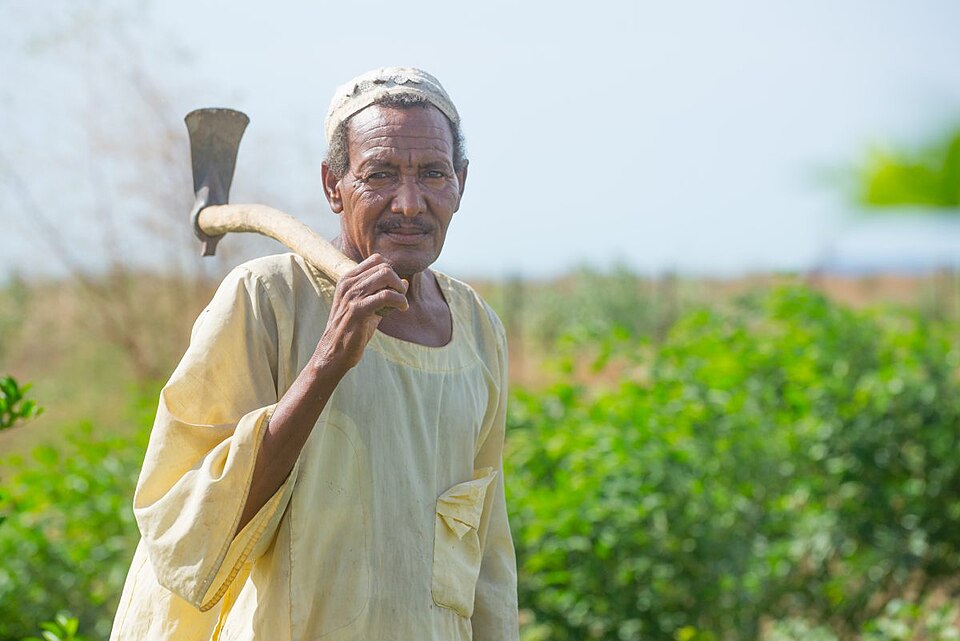
Photo credit: Wikimedia | Evon2023
Climate change is intensifying weather-related risks for farmers. Unpredictable rainfall, excessive heat, and other extreme events threaten livelihoods, particularly for small-scale farmers who often lack the resources to cope. Without protection from these weather shocks, farmers may forgo investing in their farms, since potential losses from extreme weather could undermine gains from investment, perpetuating a cycle of economic vulnerability. Therefore, a core policy challenge in low- and middle-income countries is identifying effective ways to support small-scale farmers in adapting to climate stress while improving their economic outcomes.
Contract farming and similar farmer-buyer linkage models offer potential pathways to help farmers manage weather-related risks while guaranteeing market access. In contract farming arrangements, large buyers secure contracts with farmers to purchase their goods at the end of the season. These buyers often provide integrated support services, such as partial upfront payment, access to credit, high-quality inputs, or technical assistance to facilitate production. All of these services can be designed with climate adaptation in mind.
In Upper Egypt, agriculture employs roughly 85 percent of rural workers and serves as the sole income source for 60 percent of rural households [1]. The region faces acute climate risks, yet high-value crops such as peppers and sesame offer more lucrative, albeit riskier, production options for farmers. In partnership with an agribusiness engaged in contract farming for these crops, researchers will test whether subsidized loans for agricultural inputs and participation in a contract farming program that includes climate advisories and guaranteed offtake, alone and in combination, improve agricultural and economic outcomes.
This pilot study will assess farmer uptake of contract farming services to inform the design of a future randomized evaluation. Researchers will survey farmers and analyze administrative data from the implementing partner to measure adoption of offered services, knowledge and use of climate-smart inputs and practices, and strategies used to adapt to climate-related events. The subsequent randomized evaluation will measure impacts on agricultural productivity, yields, profits, and household food security among other outcomes.