Overview
Researchers

Susan Godlonton
Assistant Professor of Economics at Williams College

Mesay Gebresilasse
Assistant Professor of Economics, Amherst College
- Country
- Ethiopia
- Constraints
- Input and Output Markets, Labor
- Technology Category
- Inputs
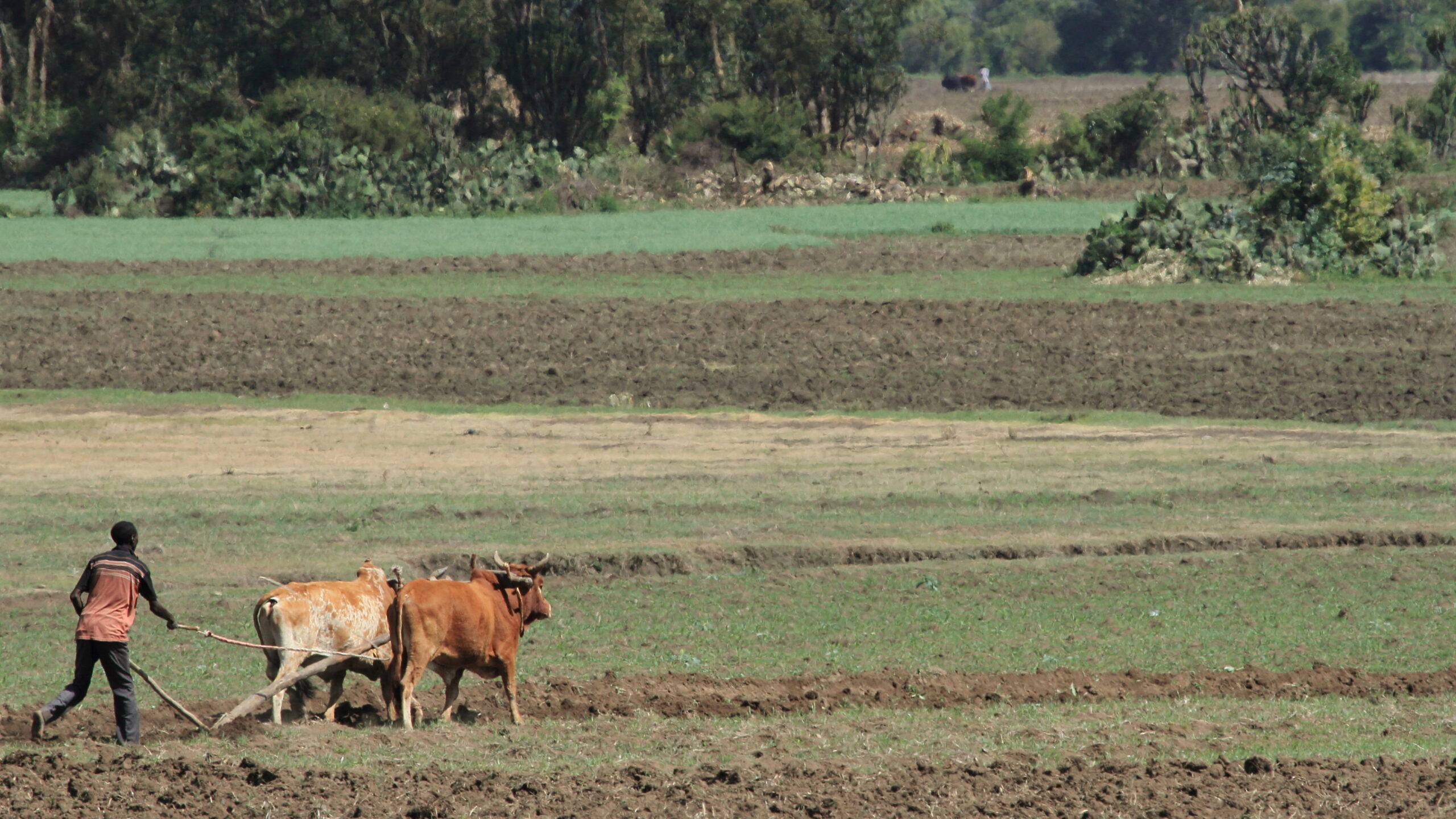
Photo credit: Abdelrahman | Adobe Stock
Policy Issue
Improving agricultural productivity is necessary to achieve rural economic development, but despite improvements in agricultural technologies, farmers’ productivity in sub-Saharan Africa lags other regions of the world. Mechanization can play a critical role in improving agricultural productivity and help farmers more efficiently allocate their labor. However, the adoption of mechanization in low- and-middle-income countries remains limited.
Policymakers are increasingly considering various interventions to improve the provision and adoption of mechanization by small-scale farmers, including stimulation of equipment rental markets. Yet, there are many obstacles to well-functioning equipment markets. On the demand side, farmers may not use mechanization services because they don’t know the benefits, can’t access credit, or find the costs too high. On the supply side, service providers may not optimize their business operations because they cannot access equipment, lack finance, have limited technical knowledge about machinery maintenance, or lack entrepreneurial experience. Can relaxing farmers’ and service providers’ constraints, separately or simultaneously, improve the provision and take-up of mechanization services among small-scale farmers?
Context of the Intervention
Ethiopia’s agricultural sector contributes over a third of the country’s GDP and employs over 60 percent of the country’s labor force.[i] This study takes place in Oromia region, within East Shewa and South West Shewa zones, in central Ethiopia. Landholdings in this region are small and major crops include wheat and maize. These factors make equipment rentals for two-wheeled tractors (2WT) an attractive intervention. Two-wheeled tractors (2WT) are versatile machines which have multiple attachments that can be used at various stages of production. Depending on the attached implements, 2WTs can be used to cultivate, till, irrigate, reap, thresh, and shell wheat or maize.
Most service providers participating in this study offered a narrow range of 2WT services. For example, eighty percent reported offering only threshing and/or shelling services, with only thirteen percent additionally offering irrigation services, and none offering harvesting services. Service providers also lacked comprehensive repair skills and financing for purchasing and maintaining such add-on equipment. Moreover, few small-scale farmers used any form of mechanized services or knew how to contact a service provider for help accessing or maintaining machines.
Details of the Intervention
In partnership with CIMMYT, researchers conducted a randomized evaluation to test the impact of firm (supply-side) and farmer (demand-side) subsidies and trainings on farmers’ use of 2WT rental services, farming household labor allocation, and providers’ entrepreneurship. The randomization of the firm and farmer interventions were undertaken in three sequential stages (firm, village, and farmer-levels) in order to ensure that the comparison group wasn’t exposed to the intervention through their connections with program participants, since firms typically service multiple villages, and to examine how the interventions might indirectly affect non-participating households. The study considered 139 mechanization service providers and 1877 farming households across two zones and 76 villages (kebeles).
Researchers randomized villages into four groups:
- Firm Only Intervention (29 villages): Selected service providers received a 5-day training workshop and a subsidy voucher for mechanical repair services. The workshop included training on machinery operation and safety, information about add-on equipment, financial literacy, and management of business operations. The subsidy voucher for mechanical repair services was offered two years later and allowed for an expenditure up to ETB 2,000 (US$46) for any repair service. While the voucher was redeemable with any mechanic, it also provided firms with the contact details of local mechanics.
- Farmer Only Intervention (9 villages): Selected farmers received a subsidy for a one-off rental mechanization service to encourage adoption. Farmers were randomly offered a high (ETB 1,500 or US$34) or a low (ETB1,000 or US$23) voucher, which were equal to one-half and one-third of the median mechanization expenditure at baseline, respectively. The voucher was redeemable for any mechanization rental service with a four-month expiration date. While the voucher was redeemable with any service provider, it also provided recipients with the contact details of firms that previously provided services in the farmers’ respective village.
- Both Firm and Farmer Intervention (30 villages): Both selected service providers and farmers received access to the intervention.
- Comparison group (8 villages): These villages did not receive access to either the firm or farmer intervention.
Researchers conducted an initial survey in May 2021 with selected households, after which households and providers were randomly assigned. Between August 2022 and April 2023, researchers conducted brief phone surveys to elicit farm mechanization usage, and time use information from households; and service offerings, utilization and revenues from service providers. In June 2023 and June 2024, researchers also conducted an in-person follow-up surveys. Researchers collected data on how many farmers took up the 2WT subsidies, and whether they were more likely to purchase mechanization services in areas where their local service providers received subsidies and training. They also measured how adoption of mechanization services impacted the allocation of farm labor, whether women and men responded differently to the interventions, and whether service providers increased revenue or expanded their businesses.
[i] https://data.worldbank.org/country/ethiopia